
Hamilton Grange Dog Policy
Hamilton Grange National Memorial is Somewhat Dog Friendly
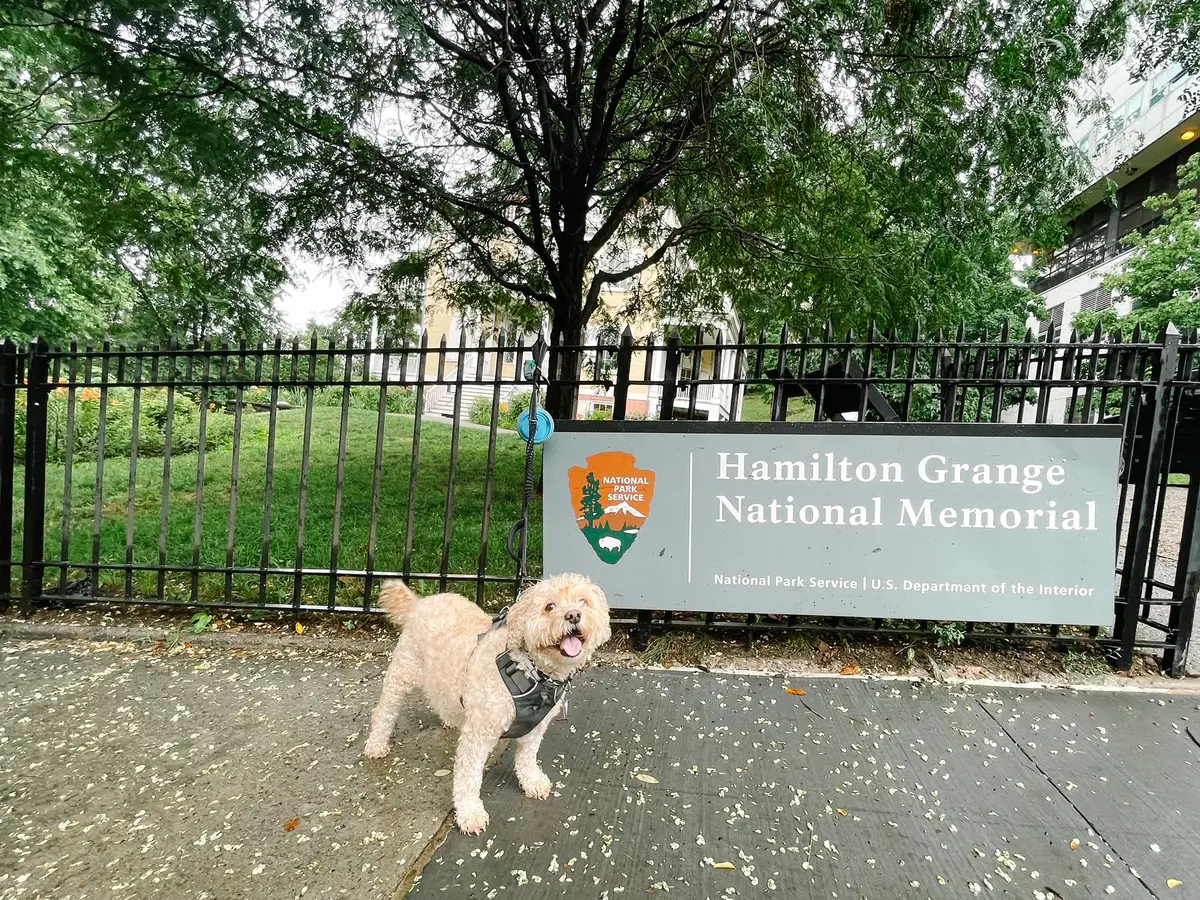


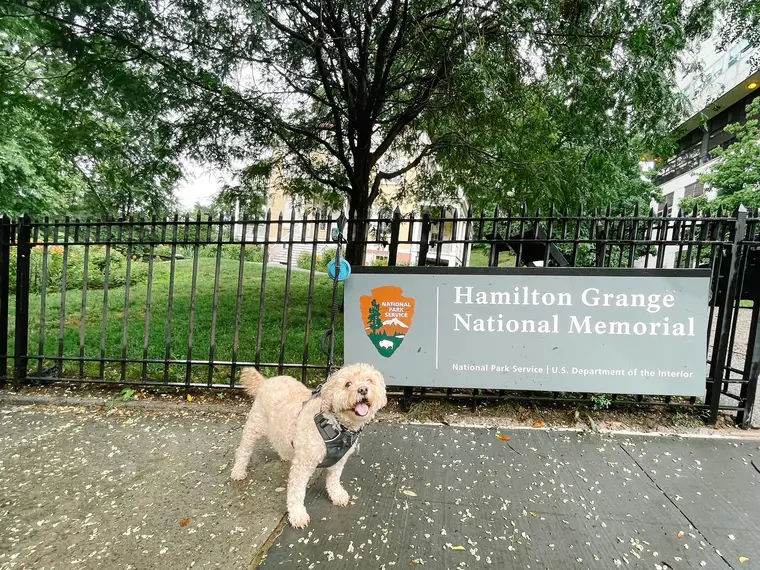
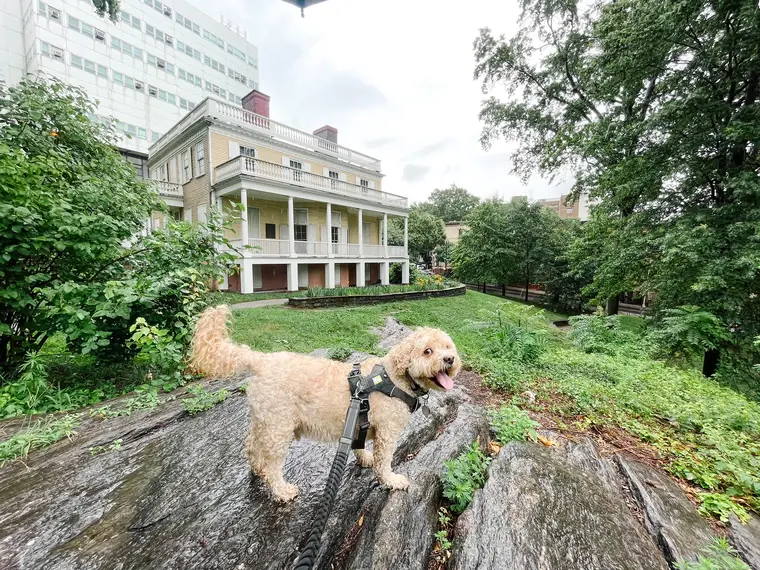
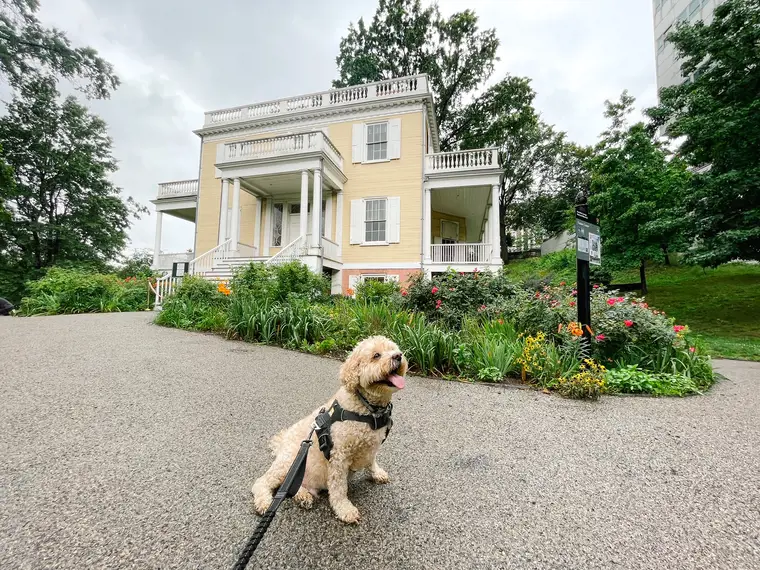
Hamilton Grange National Memorial preserves the home of Alexander Hamilton, and was completed in 1802. The home has been restored and is open to visits. It is also on a 3 acre plot of land inside St. Nicholas Park.
Hamilton Grange National Memorial is somewhat dog friendly, depending on what you want to do. Dogs are allowed on the trails around the national memorial while on a leash, but they're not allowed inside buildings and not allowed on interpretive walks. So, if your goal is to visit inside the actual home, you won't be able to go inside with your dog. Dogs cannot be left unattended here.
Note that the grounds here are open from Wednesday through Sunday, 9:00AM through 5:00PM.
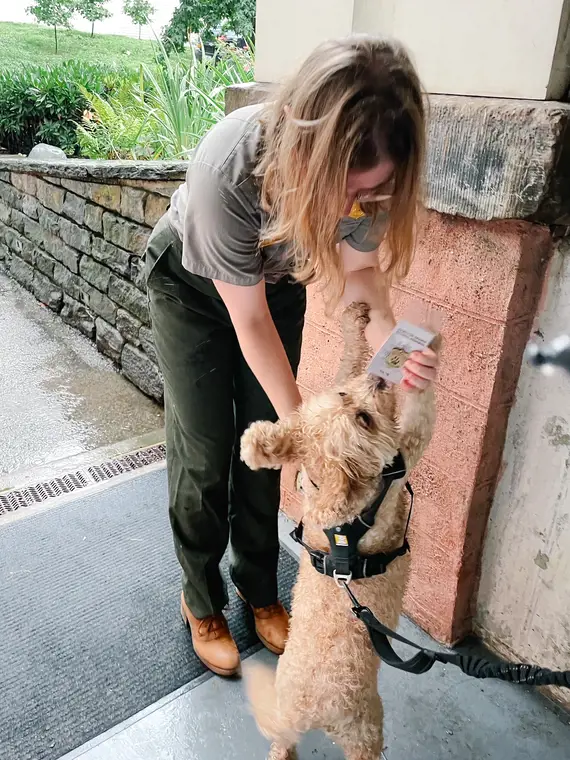
Hamilton Grange National Memorial does run the BARK Ranger Program, where you can earn a special dog tag by learning and following responsible practices (see the BARK Ranger section below).
- Website
- https://www.nps.gov/hagr/index.htm
- Pet Policy Details
- https://www.nps.gov/hagr/planyourvisit/pets.htm
- BARK Ranger
- Yes []
BARK Ranger
Bark Ranger is a great program offered at many National Park Service destinations. It teaches dog owners how to explore parks responsibly with their dogs, and participants often receive a special reward after completing the program. Many parks offer a Bark Ranger dog tag, sometimes free and sometimes available for purchase, while others may provide a bandana, sticker, certificate, or another park-specific item. To get started, stop by a park office or visitor center and ask for the Bark Ranger checklist. Once you and your dog complete the activities, return the checklist to receive or purchase the reward offered at that park. See the link below for more details.
B.A.R.K. is an acronym for:
- B: Bag your poop
- Help keep the park clean by bagging and picking up your dog poop, and properly disposing of it. Don’t leave your bagged poop on the side of the trail, hanging from branches, or throw it into the woods. Please note dog poop is not a natural fertilizer — it can carry disease that can spread to wildlife or other dogs.
- A: Always wear a leash
- Dogs must be restrained on a leash no longer than 6'. Retractable leashes that extend beyond 6' are not allowed. Not everyone appreciates a dog running up to them, and many people are scared or allergic to dogs — a leash prevents uncomfortable situations between your dog and others. Leashes also help protect your dog from running off if anything spooks them.
- R: Respect wildlife
- Dogs can chase or scare wildlife such as birds and turtles. They can also damage nesting areas. Some parks have wildlife, such as bears, coyotes, or wolves, that can threaten your dog. Please be respectful of wildlife with your dog, and if you do encounter wildlife, keep dog at distance to protect both your dog and the wildlife.
- K: Know where to go
- Know which trails allow dogs, and which don’t. Don’t leave dogs unattended in vehicles while you go off to hike. See the link below for more details.
For more information on the Bark Ranger program, please see: https://www.nps.gov/hagr/planyourvisit/pets.htm
We also have a list of all parks that run the BARK Ranger program.
Location & Map
Have a photo of your dog here?
Note: Policies can change -- please make sure to check official dog/pet policies prior to making plans or booking travel.
Please tell us if you think there’s anything we should add or change on this page.